The Soldier’s Shadow: A Widow’s Heart, a Friend’s Promise, and the Ghost Who Came Home
Is there any pain more cruel than this?
In the quiet suburbs of a mid-sized American town, where American flags still flutter from porches and military families gather for barbecues on summer evenings, Sarah Thompson’s world shattered on a rainy Tuesday afternoon. A knock at the door changed everything. It wasn’t the chaplain in dress uniform she had always feared. It was Captain Michael Reynolds—her husband’s best friend and brother-in-arms—standing there with rain dripping from his cap and sorrow carved deep into his face.
“Sarah… I’m so sorry,” he said, voice cracking. “David is gone.”
The Day the World Ended
David Thompson had been a decorated Army Special Forces operator, the kind of man who lived for duty, country, and the quiet pride of protecting the people he loved. He and Sarah had been high-school sweethearts. Their love story was the kind locals still talked about—prom king and queen who actually made it, two kids, a modest but happy home, weekend hikes, and Sunday pancakes. David deployed often, but this last mission was different: classified, high-risk, deep in hostile territory.
When Michael delivered the news, Sarah collapsed. The official report said David’s team had been ambushed during an extraction. No body was recovered—standard language in special operations that offered families just enough hope to keep breathing, but not enough to truly live. For weeks, Sarah moved through her days like a ghost herself. The children, eight-year-old Emily and six-year-old Jacob, asked constantly when Daddy was coming home. She had no answers, only tears she hid behind closed bedroom doors.
Michael started coming around more. At first it was practical—fixing the leaky faucet David always meant to repair, mowing the lawn, helping with groceries, and sitting with the kids so Sarah could finally shower without worrying they’d hear her sobbing. He brought David’s favorite coffee from the base commissary and shared old stories that made her laugh through the pain.
“I promised him,” Michael said one evening as they sat on the back porch watching fireflies. “If anything ever happened to me out there, he’d look after you and the kids. He made me swear the same. I’m not going anywhere, Sarah. Not until you tell me to.”
She was reluctant. Deeply. The guilt felt like another layer of grief. How could she even consider leaning on another man—especially David’s closest friend—so soon? It felt like betrayal. But Michael never pushed. He was patient, respectful, and present in all the ways David’s long absences had left voids. His sincerity chipped away at her walls, one kind gesture at a time.
Opening a Wounded Heart
Months turned into a year. The military declared David deceased. A memorial service was held with full honors—folded flag, rifle salute, the heartbreaking notes of Taps echoing across the cemetery. Sarah wore black and clutched her children’s hands while Michael stood stoically beside them, a silent guardian.
Slowly, almost against her will, Sarah began to heal. Michael’s love was gentle, never rushed. He didn’t try to replace David; he honored him. He kept David’s photos on the walls, told the kids stories about their father’s bravery, and even helped maintain the small memorial garden Sarah had planted in the backyard.
Late-night conversations about loss, faith, fear, and second chances deepened their connection. Michael confessed his own guilt—survivor’s guilt—for being the one who came home while his brother didn’t. Sarah found herself comforting him, and in that shared vulnerability, something beautiful and unexpected bloomed.
“I never thought I could feel this again,” she told him one crisp autumn evening as they walked through fallen leaves. “But you make me believe life can still be good.”
When Michael proposed six months later, Sarah said yes. The children were overjoyed. The community rallied around them—casseroles, offers to watch the kids, and genuine happiness that this young widow had found light after unimaginable darkness. Wedding plans moved forward quickly: a small ceremony at the local church where she and David had married, simple white flowers, and Emily as the flower girl carrying a photo of her father tucked into her bouquet.
The Dress, the Vows, and the Ghost
Two days before the wedding, Sarah stood in the bridal boutique for her final fitting. The ivory gown hugged her figure elegantly. She twirled in front of the mirror, a fragile smile on her face. For the first time in nearly two years, she allowed herself to feel hopeful. Michael had been her rock. He loved her children as his own. Life was moving forward.
Then came the second knock that would upend everything.
She was at home, adjusting her veil one last time in front of the hallway mirror, when the doorbell rang. Thinking it was the florist, she opened the door with a light heart.
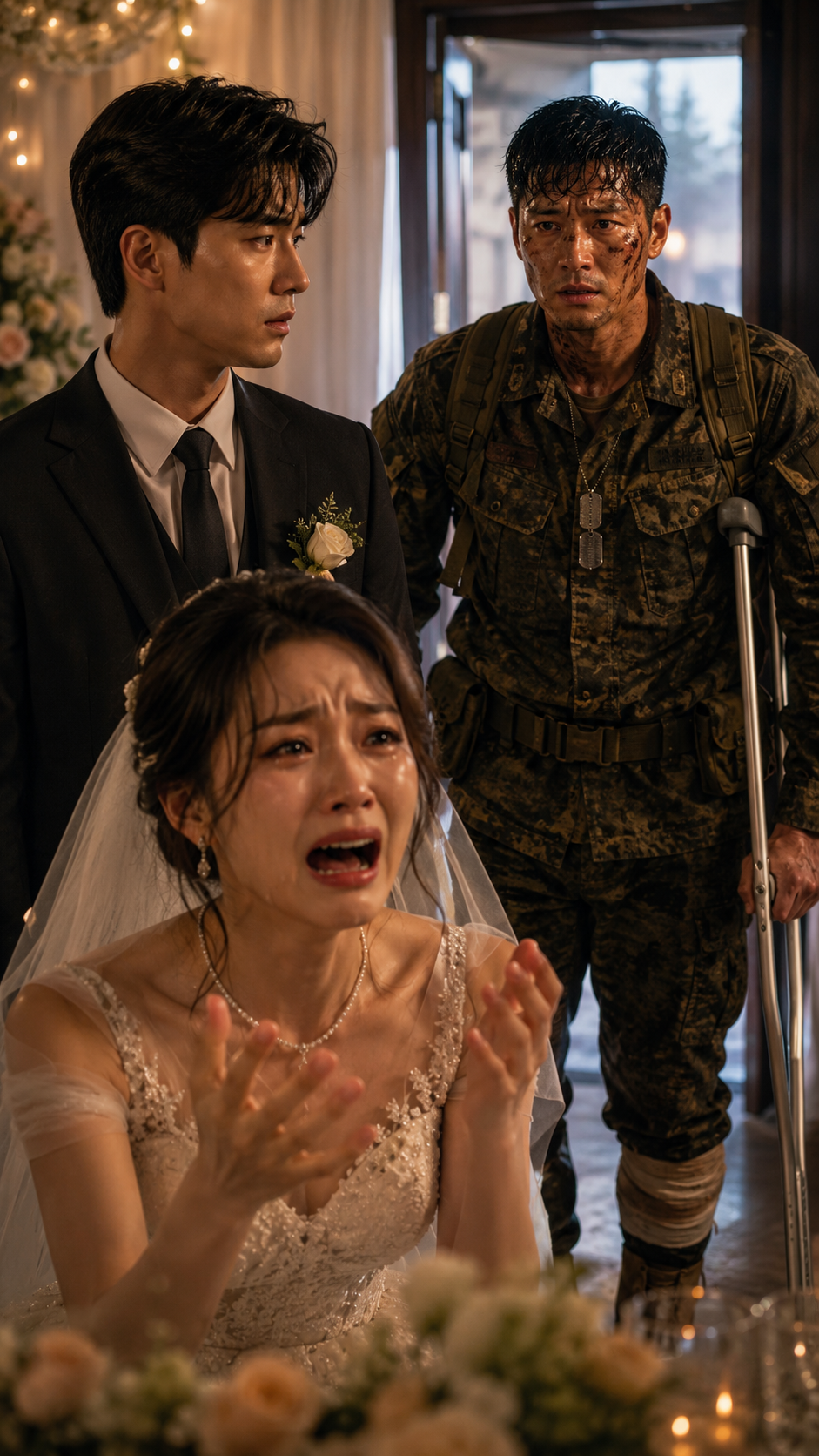
The man standing there was thin, weathered, and leaning heavily on a cane. His face—once handsome and familiar—was a map of scars, one side pulled tight from burns, an eye slightly drooping. But those eyes… those were David’s eyes.
“Sarah,” he whispered, voice hoarse from disuse.
She screamed. Not in fear, but in the raw, primal shock of seeing a ghost. David Thompson—her husband, the father of her children, the man the Army had declared dead—had come home.
The Impossible Return
The story that unfolded over the following days was nothing short of miraculous and devastating. David had survived the ambush, gravely wounded and captured. For nearly eighteen months he endured brutal conditions in a remote enemy camp. A daring rescue operation by another special forces unit finally freed him and several other prisoners. The military had kept his survival classified until they could verify his identity and ensure his family’s safety. Communication blackouts during the operation meant no one—not even Michael—had known.
David’s body bore the evidence of his ordeal: a severe limp from a shattered leg that had been poorly set, scars across his face and torso, and the invisible wounds of trauma that would take years to heal. He had survived on the single thought that kept him alive: getting back to Sarah and the children.
But now he stood in the ruins of the life he had left behind. His wife was wearing a wedding dress for another man—his best friend. The children called Michael “Uncle Mike” and looked at him with the easy affection reserved for a father figure.
Heartbreak, Healing, and Hard Choices
The days that followed were a whirlwind of tears, anger, joy, confusion, and soul-searching. Sarah was torn between overwhelming relief that David was alive and the deep love she had developed for Michael. David felt gratitude toward his friend for protecting his family, but also the raw pain of seeing his wife in another man’s arms. Michael, ever the honorable soldier, immediately stepped back, offering to disappear if that was what Sarah needed.
“I kept my promise,” Michael told David privately, voice thick with emotion. “I looked after them. But she was always yours. She never stopped loving you.”
The family sought counseling. The children, young as they were, were ecstatic to have their father back but struggled with the sudden change. Community support poured in once again, this time laced with awe at the miracle and empathy for the complicated triangle.
Sarah ultimately chose David. Their bond, forged in young love and tested by war and presumed death, proved unbreakable. Michael attended their quiet recommitment ceremony months later—not as the groom, but as the best man once more, standing proudly beside the brother he had thought he’d lost. He later moved to another base, finding his own path to healing.
What This Story Teaches Us About Love, Loyalty, and Resilience
Stories like Sarah, David, and Michael’s remind us that real life is rarely as tidy as fairy tales. Military families carry burdens most civilians never see: the constant fear of loss, the strain of long separations, the invisible injuries that no medal can heal. According to the Department of Veterans Affairs, thousands of service members go missing or are presumed dead only to resurface years later in rare cases, leaving families in emotional limbo.
This tale also highlights the power of sincere friendship. Michael’s unwavering support was never about opportunism; it was about keeping a sacred promise between brothers. His willingness to step aside when David returned speaks volumes about character and sacrifice.
For anyone walking through grief, this story offers hope. Hearts can heal, love can return in unexpected forms, and even the deepest wounds can eventually scar over into strength. Sarah’s journey from devastation to renewed hope shows that it is possible to honor the past while embracing the future—however complicated that path may be.
Today, the Thompson family lives quietly. David continues physical therapy and works with veterans’ organizations. Sarah advocates for military spouses. Michael remains a cherished friend and uncle. The scars remain, but so does the love—deeper, wiser, and forged in fire.
Life can take everything away and then, in the most ironic twist of fate, give it back. The question is whether we have the courage to receive it.