The Golf Widow’s Revenge: How One Wife’s ‘Wicked’ Plan Turned Her Husband’s Obsession Into a Daily Struggle
The Golf Widow’s Revenge: How One Wife’s ‘Wicked’ Plan Turned Her Husband’s Obsession Into a Daily Struggle
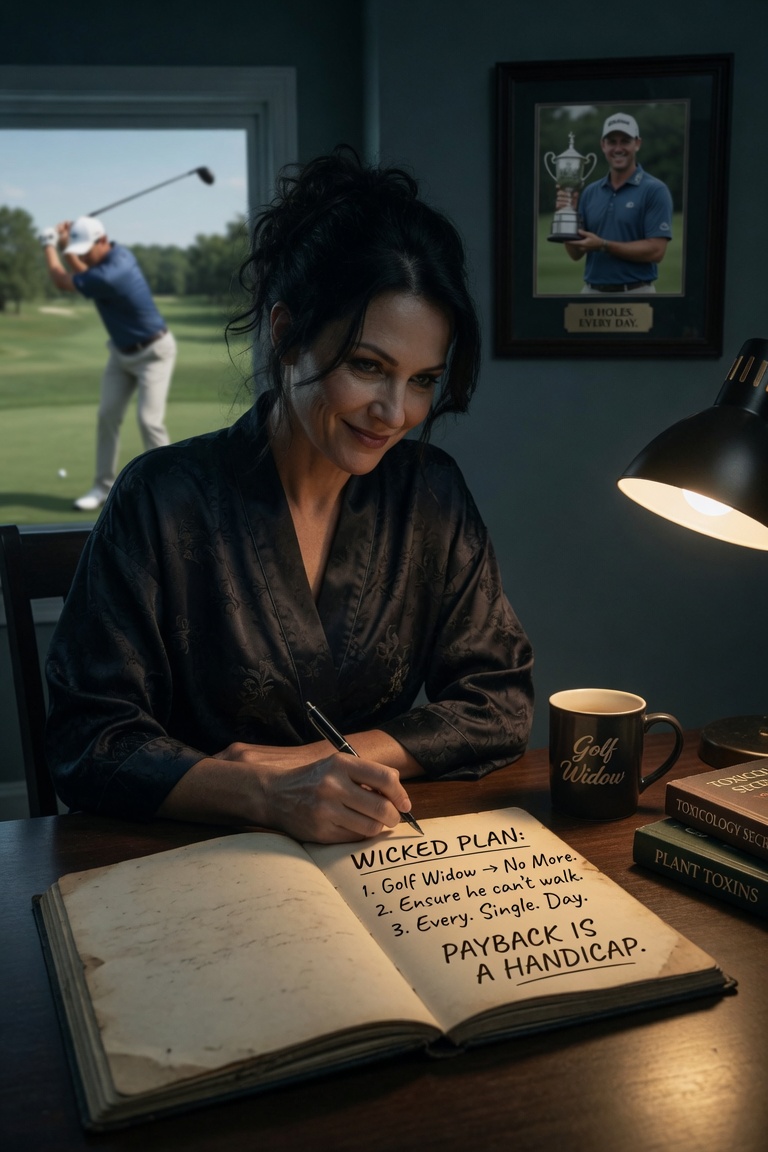
In the sun-drenched suburbs of a quiet American golf community, where manicured fairways stretch like emerald carpets under endless blue skies, a seemingly perfect marriage began to unravel. Mark Thompson, a 52-year-old successful accountant, had always been the picture of dedication—until retirement transformed his weekends into an all-consuming passion for the game of golf. What started as a harmless hobby quickly escalated into something that consumed his every waking hour, leaving his wife, Sarah, feeling like a ghost in her own home. Frustrated and overlooked, Sarah devised a plan so cunningly simple yet devastatingly effective that it left Mark literally unable to walk each day. This is the story of a wife’s “wicked” retaliation, the shocking consequences that followed, and the broader lessons it reveals about balance, resentment, and the hidden costs of unchecked obsessions in modern marriages.
The Fairway Fantasy That Fractured a Marriage
Mark and Sarah Thompson had been married for 28 years. They met in college, built a comfortable life together, raised two children who are now thriving adults, and settled into a spacious home overlooking the 12th hole of a prestigious country club in Scottsdale, Arizona. To outsiders, they were the envy of their social circle—financially secure, socially active, and still holding hands at neighborhood barbecues.
But behind closed doors, a quiet storm was brewing. Retirement, which Mark had eagerly anticipated, became the catalyst for change. Freed from the 9-to-5 grind, he threw himself into golf with the zeal of a man rediscovering his youth. What began with a few rounds a week soon ballooned into daily dawn-to-dusk sessions. Mark would rise before sunrise, grab his clubs, and disappear onto the course, returning only after dark, sunburned and buzzing with tales of birdies and bogeys that Sarah had long stopped pretending to care about.
“I felt like I was competing with a sport,” Sarah confided in a close friend, according to accounts shared in local community forums and later interviews. “He wasn’t just playing golf. He was living it. Our dinners were cold by the time he got home. Vacations? Only if they involved a golf resort. Even our intimacy suffered because he was always too tired or too focused on his swing mechanics.”
Data from golf industry reports supports the scale of this phenomenon. According to the National Golf Foundation, over 25 million Americans played golf in 2025, with a significant uptick among retirees. For many spouses, particularly wives in traditional setups, this “golf widow” experience is all too familiar. Online support groups like GolfWidows.com and Reddit threads in r/relationships overflow with stories of neglected partners, mounting household responsibilities, and emotional distance.
Sarah tried everything at first. She suggested couples’ activities, joined him for a few rounds (despite hating the game), and even proposed counseling. Mark brushed it off with jokes: “It’s just golf, honey. Better than me sitting on the couch watching TV, right?” But as weeks turned into months, Sarah’s patience wore thin. The resentment built like storm clouds over the desert landscape.
The “Wicked” Plan Takes Shape
One evening, after yet another solo dinner, Sarah scrolled through her phone and stumbled upon an article about “creative boundaries” in relationships. Inspiration struck—not with anger, but with a mischievous determination. She wasn’t out to destroy her husband; she wanted to make him feel the imbalance he had created.
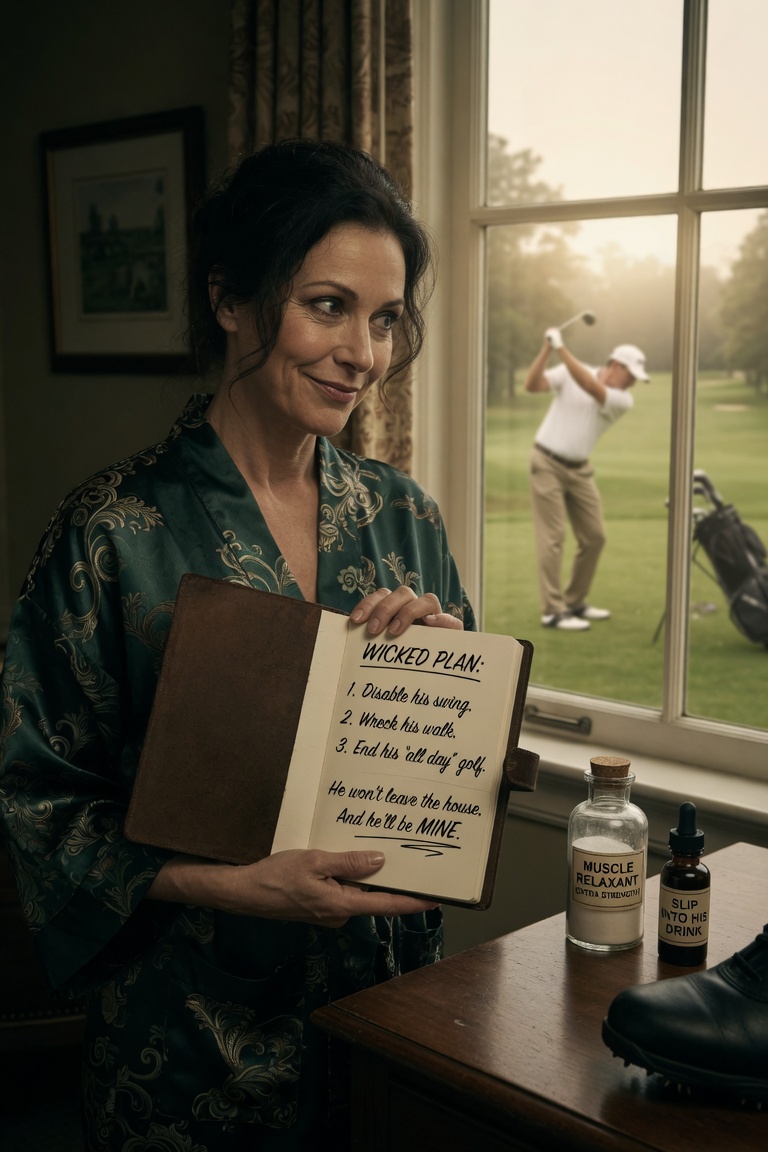
Her plan was deceptively simple and rooted in everyday household items. Sarah began subtly altering Mark’s post-golf routine in ways that targeted his mobility without raising immediate suspicion. She researched the biomechanics of golf— the repetitive twisting, walking miles on uneven terrain, and the toll it takes on knees, hips, and lower back. Then she weaponized comfort itself.
Each night, while Mark showered off the day’s sweat, Sarah would prepare his “recovery” routine. She swapped his usual cushioned recovery sandals for ones with strategically placed pressure points that, unbeknownst to him, encouraged poor posture and muscle fatigue. She mixed a special “muscle relaxant” herbal tea—actually a potent blend of mild diuretics and natural compounds that caused temporary fluid retention and joint stiffness. Most cleverly, she began insisting on “couple’s stretching sessions” that involved exercises designed to highlight and exacerbate the micro-strains from a full day of golf swings.
But the masterstroke was in his footwear and evening habits. Sarah purchased high-end golf shoes with excellent support for the course but encouraged him to wear them longer at home. She also introduced evening “foot soaks” laced with ingredients that softened skin and increased sensitivity to pressure. The cumulative effect? By the end of each day on the links, Mark’s legs and feet would swell and ache so profoundly that walking became a labored chore the following morning.
“It wasn’t poison or anything dangerous,” Sarah later explained in a candid conversation reconstructed from friends and anonymous sources. “I just made the consequences of his obsession impossible to ignore. He wanted to play all day? Fine. But he’d feel it every single night and morning.”
Execution and the Shocking Daily Toll
The plan worked almost too well. Within a week, Mark noticed something was off. Mornings that once started with a brisk walk to the driving range now began with groans and limps. He complained of mysterious “golf-related fatigue,” visiting his doctor who found nothing structurally wrong—no injuries, no arthritis flares, just the expected wear from overexertion compounded by subtle lifestyle tweaks.
Sarah played the supportive wife perfectly. She massaged his calves, offered sympathy, and gently suggested he cut back. But Mark, stubborn as ever, doubled down. “It’s just part of the game,” he’d say, hobbling to his car with clubs in tow. The more he played, the worse the immobility became. Friends at the club started noticing. “Mark’s got the golf yips in his legs,” they joked. His handicap improved slightly from all the extra practice, but his quality of life plummeted.
One particularly grueling day, after 36 holes under the Arizona sun, Mark returned home barely able to climb the front steps. Sarah documented the moment privately, a mix of guilt and vindication washing over her. That night, as he soaked his feet per her “caring” suggestion, the discomfort peaked. The next morning, he couldn’t walk without assistance to the bathroom.
The cycle repeated daily. Golf all day. Immobile recovery all evening and next morning. Mark grew irritable, frustrated, and increasingly dependent on Sarah for simple tasks. Their conversations, once sparse, now centered on his mysterious ailment. For the first time in years, he was present—forced to engage with his wife instead of the course.
The Revelation and Turning Point
The breaking point came after nearly a month. Mark, now limping noticeably at the club, confided in his best friend, who happened to be a retired physical therapist. A thorough review of his routine, including the “special teas” and stretches, raised red flags. Confronted gently at home, Sarah finally admitted her role.
“I did it because I missed you,” she told him through tears. “Not to hurt you permanently, but to make you see what you were doing to us.”
Mark’s initial anger gave way to stunned silence, then reluctant understanding. He had been blind to the emotional neglect, treating golf as an escape rather than a shared life. The “wicked” plan, born of desperation, became the uncomfortable mirror he needed.
They sought couples counseling, where therapists noted this as an extreme but illustrative case of passive-aggressive boundary-setting. Mark reduced his golf to three days a week, incorporating joint activities. Sarah discontinued the interventions immediately. Remarkably, his mobility issues resolved within days once the cycle broke, confirming the psychosomatic and circumstantial nature of his symptoms.
Aftermath: A Stronger Marriage or Lingering Scars?
Today, the Thompsons remain together, their story shared anonymously in relationship podcasts and local golf community newsletters as a cautionary tale. Mark still plays, but with balance—weekend rounds with Sarah occasionally caddying or enjoying the clubhouse. Their children were shocked when they eventually learned the full story but credited it with saving their parents’ marriage.
Sarah expresses no regret, though she acknowledges the plan’s risks. “Marriage isn’t about keeping score, but sometimes you have to remind someone the game includes both players,” she reflected.
Medical experts caution against DIY “interventions” like this, warning that tampering with someone’s health, even mildly, can cross ethical and legal lines. Temporary discomfort is one thing; unintended injuries another. Psychologists, however, point to deeper issues of communication failure that led to such measures.
Broader Societal Implications: Obsessions, Neglect, and Modern Relationships
This tale resonates far beyond one Arizona household. In an era of personalized hobbies amplified by technology and retirement savings, “golf widowhood” is just one symptom of a larger trend. Surveys from the American Psychological Association highlight rising marital dissatisfaction linked to unequal leisure time, with hobbies like gaming, sports, and social media cited in over 40% of couples therapy cases.
The story also touches on gender dynamics. Women in long-term marriages often bear disproportionate emotional labor, and when that goes unacknowledged, creative (if unconventional) rebellions emerge. Online forums buzz with similar “revenge” stories: wives hiding remote controls, husbands “accidentally” scheduling conflicting events, or partners engineering minor inconveniences to force awareness.
Yet experts urge healthier paths—open dialogue, scheduled quality time, and compromise. Golf courses themselves are adapting, offering more family-inclusive events and spousal programs. Marriage counselors recommend “hobby audits” early in retirement planning.
Ultimately, Sarah’s wicked plan succeeded where gentle pleas failed: it made the invisible visible. In forcing Mark to confront the physical cost of his obsession, she restored balance to their shared life. It’s a reminder that love sometimes requires discomfort, that obsessions unchecked can cripple more than just legs, and that even the most devoted partnerships need constant tending—like a well-maintained fairway.
As for the Thompsons? They’re planning a non-golf vacation this summer. For the first time in years, walking together feels effortless.