After being nagged by his girlfriend for making too many mistakes, the guy pushed her into the lake and calmly picked up his things and left.
Golf Course Horror: Man Pushes Nagging Girlfriend into Lake After Argument Over Mistakes, Then Calmly Walks Away – Chilling New Details Emerge
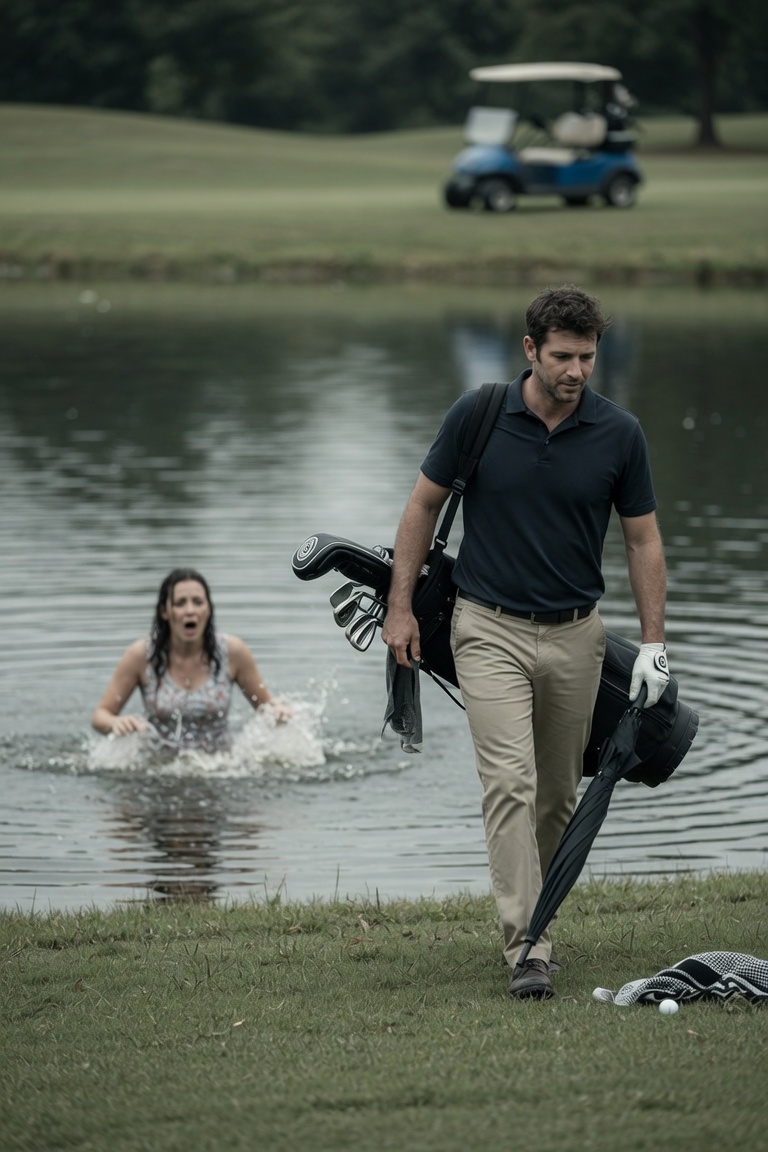
On a picture-perfect afternoon at the scenic Lakeside Pines Golf Club, what began as a casual couples’ round turned into a nightmare of cold-blooded indifference and shocking violence. After his girlfriend repeatedly nagged him about his poor performance on the course, 32-year-old software engineer Marcus Hale allegedly pushed her into the deep, murky waters of the signature lake on the 14th hole. As she struggled and screamed for help, Marcus calmly picked up his golf bag, clubs, and personal items, and walked away without looking back.
This rare and deeply disturbing incident has sent shockwaves through the golfing community and beyond, raising urgent questions about domestic violence, emotional triggers, and the illusion of safety in recreational spaces. What followed was a tense manhunt, a desperate rescue, and a legal case that continues to unfold with chilling revelations about Marcus’s detached demeanor.
The Fatal Golf Date That Ended in Tragedy
Lydia Chen, 29, a vibrant marketing coordinator known for her infectious laugh and competitive spirit, had convinced her boyfriend of eight months to join her for a Saturday afternoon round. Friends described the couple as “opposites attract”—Marcus, the quiet, analytical type who obsessed over perfecting his swing, and Lydia, the outgoing social butterfly who loved turning everything into a fun challenge.
According to multiple witnesses and course surveillance, the day started pleasantly enough. But Marcus was having an off day. His drives sliced into the rough, his irons went short, and his putting was erratic. Lydia’s light-hearted teasing gradually escalated into what prosecutors later called “persistent nagging.”
“You always do this, Marcus! Focus! Stop making the same mistakes!” witnesses overheard her saying on the 13th fairway. Marcus grew visibly agitated, his usual calm exterior cracking under the pressure. By the time they reached the scenic 14th hole—bordered by a large ornamental lake with dramatic waterfalls—the tension boiled over.
An argument erupted. Lydia reportedly criticized his technique again, comparing him unfavorably to other players. In a moment of explosive rage, Marcus shoved her hard toward the water’s edge. She lost her balance on the slippery bank and plunged into the lake, which was over 12 feet deep in that section.
What happened next has horrified investigators and the public alike. Instead of helping, Marcus stood motionless for several seconds, watching as Lydia flailed and gasped for air. She was not a strong swimmer, and the weight of her soaked clothes pulled her down. According to a nearby golfer who rushed to the scene after hearing screams, Marcus then bent down, methodically collected his golf clubs, adjusted his cap, and strolled away along the cart path as if nothing had happened.
“He didn’t run. He didn’t panic. He just… left,” the witness recounted in a sworn statement. “It was the calmest, most terrifying thing I’ve ever seen.”
Emergency responders arrived within minutes after frantic 911 calls. Lydia was pulled from the water unconscious and suffering from hypothermia and near-drowning. She spent five days in intensive care and remains traumatized, with lingering respiratory issues and emotional scars that may never fully heal.
The Manhunt for a Man Who Simply Walked Away
Marcus Hale did not flee the state or go into hiding. In a detail that has only heightened the case’s notoriety, he drove home, showered, and ordered takeout as if it were any other Saturday. When police arrived at his apartment later that evening—tipped off by course staff and witnesses—he answered the door calmly and asked, “Is this about the lake incident?”
His nonchalant attitude stunned officers. Bodycam footage, later released in redacted form, shows Marcus shrugging and saying, “She was nagging me nonstop. I just needed her to stop. I figured the water would cool her down.”
Marcus was arrested on charges including aggravated assault, domestic violence, and reckless endangerment. Prosecutors are considering upgrading charges based on the apparent indifference to Lydia’s life-threatening situation. His golf clubs, still damp from the humid afternoon, were seized as evidence, along with his smartwatch data showing no elevated heart rate during or immediately after the push.
Unpacking the Relationship: Nagging, Mistakes, and Hidden Resentment
Interviews with friends and family reveal a relationship that had been deteriorating for months. Lydia had grown frustrated with Marcus’s perfectionism and emotional unavailability. Golf, which they initially enjoyed as a shared activity, became a battleground for deeper issues.
“She wanted him to improve, but also to just have fun,” one friend shared. “Marcus took every mistake personally. He’d brood for days after a bad round.”
Court documents allege a pattern of controlling behavior from Marcus, including monitoring Lydia’s location and criticizing her appearance and career choices. The golf course incident appears to have been the breaking point where suppressed resentment erupted into physical violence.
Psychologists following the case note that “nagging” is a common trigger in domestic disputes, often masking deeper communication failures. Dr. Elena Vargas, a relationship expert, explained: “What one partner sees as helpful feedback, the other may perceive as relentless criticism. In individuals with poor emotional regulation, this can lead to disproportionate reactions.”
The golf setting adds another layer. Courses are often viewed as escapes, and disruptions to that peace—especially public criticism—can amplify tensions dramatically.
Investigation Breakthroughs and Courtroom Tension
Forensic teams recovered Lydia’s phone from the lake bottom, its video recording app still running and capturing audio of the argument and her desperate cries for help. This digital evidence has proven devastating for the defense.
Marcus’s legal team argues the push was impulsive, not intentional, and that he believed Lydia could swim to safety. They plan to highlight his lack of prior criminal history and claim temporary emotional distress. However, the calm departure captured on multiple angles of course cameras tells a different story—one of calculated detachment.
As the case heads toward trial, public interest has surged. Golf forums and social media are flooded with debates: Should couples even play golf together? How should courses handle domestic incidents? The Lakeside Pines Club has since installed additional safety rails around water hazards and enhanced staff training for emergency response.
The Aftermath: Healing, Justice, and Lingering Fear
Lydia Chen is recovering at home with family support. In a statement released through her attorney, she said: “I thought he loved me. Instead, he left me to drown over a golf game. I’m grateful to be alive and hope this prevents someone else from experiencing the same terror.”
Marcus remains in custody, his once-promising career on hold. Friends who knew him as “quiet and reliable” express disbelief, with some suggesting undiagnosed mental health issues or hidden stressors.
The incident has sparked broader discussions on golf course safety, relationship dynamics during recreational activities, and the need for greater awareness of domestic violence red flags—even in seemingly stable couples.
Why This Golf Course Push Captivates and Terrifies
This case stands out for its cold efficiency. Unlike passionate crimes of rage, Marcus’s actions reflect a disturbing calm. He pushed, observed, and departed as if completing a routine task. The golf course—symbol of relaxation and precision—became the stage for betrayal.
Experts warn that such incidents highlight the hidden pressures in modern relationships. With social media curating perfect images of couples’ activities, the reality of conflicts during “fun” outings like golf can catch partners off guard.
Animal control and safety advocates have even drawn parallels to other recreational hazards, urging venues to prepare for human conflicts as diligently as they do for environmental risks.
As the trial approaches, the community around Lakeside Pines Golf Club continues to grapple with the horror that unfolded on their pristine fairways. The lake on the 14th hole, once a scenic highlight, now carries a darker reputation.
Marcus Hale’s calm walk away may have been his final mistake. In the eyes of the law and the public, indifference to a loved one’s suffering may prove more damning than the push itself.
Lydia’s survival offers a glimmer of hope, but the psychological wounds run deep. One nagging comment too many, one push too far, and a perfect golf day dissolved into a fight for life.
The fairways remain open, but for many, the game will never feel quite the same.